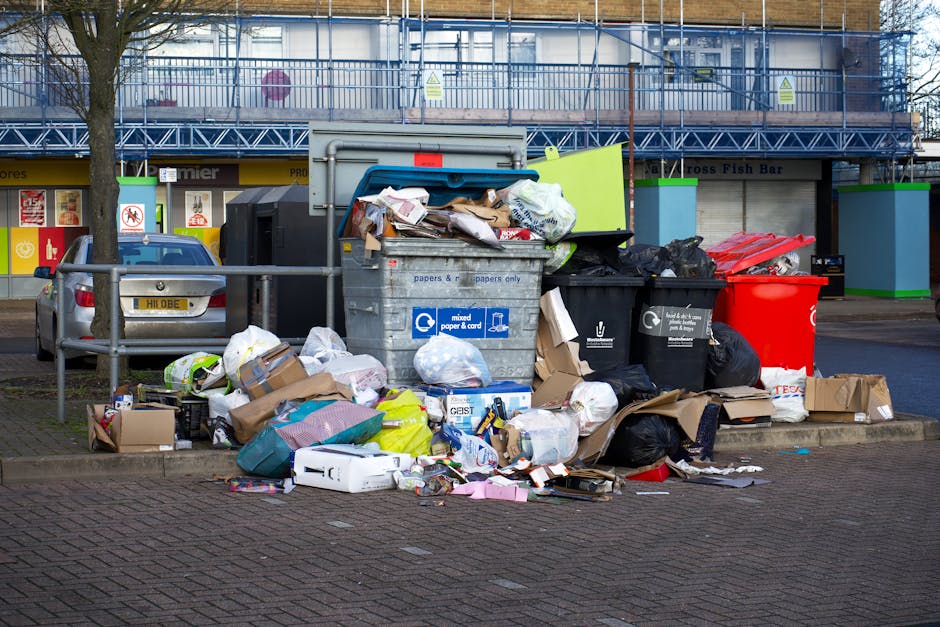
Redbridge Council bulky waste rules for Wanstead residents
If you live in Wanstead and you've got an old sofa, a broken wardrobe, or a mattress that's been leaning against the wall for weeks, you've probably hit that awkward moment: how do you get rid of bulky waste without creating a bigger headache? The Redbridge Council bulky waste rules for Wanstead residents are designed to keep that process orderly, safe, and fair - but the details can feel a bit fiddly at first.
This guide breaks everything down in plain English. You'll learn what counts as bulky waste, what the usual council expectations are, how the process tends to work in practice, where people often go wrong, and when a private clearance service may be the calmer option. Let's face it, nobody wants to wrestle a chest of drawers down a narrow Wanstead staircase at 8 a.m. if there's a better way.
By the end, you should have a clear sense of what to do next, whether you're clearing a single item, a flat, or a full house. And if you're comparing options, you can also explore practical services like furniture disposal or broader waste removal support when council collection is not the neatest fit.
Table of Contents
- Why these rules matter in Wanstead
- How the bulky waste process usually works
- Key benefits and practical advantages
- Who this is for and when it makes sense
- Step-by-step guidance
- Expert tips for better results
- Common mistakes to avoid
- Tools, resources and recommendations
- Law, compliance and best practice
- Options and comparison table
- Real-world example
- Practical checklist
- Conclusion
- Frequently Asked Questions
Why Redbridge Council bulky waste rules for Wanstead residents Matters
Bulky waste is one of those things that seems simple until you're standing in the hallway with a fridge-sized dilemma and a deadline. In Wanstead, the rules matter because the wrong approach can lead to missed collections, extra handling, fly-tipping risk, or items being left where they should not be. Nobody wants that on their street, and frankly, local roads and pavements are not the place for a permanent sofa exhibition.
There's also a practical side. Wanstead homes range from compact flats to larger family houses, and access can be tight. A bulky waste item may be perfectly legal to dispose of, but still awkward to move, store, or present for collection. If you know the council rules early, you can plan around access, booking lead times, and what needs dismantling.
Another reason it matters is cost and convenience. Council collection can be a sensible option for a single item or two. But if you've got multiple pieces, mixed materials, or something heavy and awkward, a different route may save time and stress. For larger clearances, people often look at services such as house clearance, home clearance, or flat clearance when the job goes beyond a simple pickup.
Quick takeaway: the council route is usually best for smaller, defined bulky items; private clearance becomes more appealing when access is difficult, timing is tight, or the volume starts creeping up. That's the honest version.
How Redbridge Council bulky waste rules for Wanstead residents Works
The exact process can change over time, so it is always wise to check the current council guidance before booking. Still, the overall pattern is fairly consistent across London boroughs: you identify the item, confirm that it qualifies as bulky waste, book a collection slot if available, and present the item in the way the council specifies.
In practical terms, bulky waste normally means large household items that are too big for regular bin collections. Think sofas, armchairs, wardrobes, tables, mattresses, and similar items. It usually does not include general bags of rubbish, loose building debris, or hazardous waste. That distinction matters more than people think. A well-meaning bundle of mixed junk can easily become an uncollectable mess.
Residents in Wanstead should also think about access. Can the collection team carry the item from the front garden, driveway, or shared area? Does it need to be dismantled? Is there a lift, a narrow stairwell, or controlled parking? These little things decide whether the job is straightforward or mildly chaotic.
Many people underestimate the importance of preparation. If a wardrobe still has mirrored doors attached, or a sofa is blocked by a hallway full of shoes, the collection day can become delayed or declined. Truth be told, a five-minute tidy-up can save a surprising amount of bother.
If the item is furniture, you may also want to think about whether it could be reused, repaired, or separated into recyclable components. That's where a dedicated service such as furniture clearance can make the process smoother, especially if you want more than one item removed in a single visit.
Key Benefits and Practical Advantages
Following the proper bulky waste route is not just about ticking a council box. It solves a real-world problem in a tidy, low-drama way.
- Less risk of fly-tipping: good disposal habits help keep Wanstead streets, alleyways, and communal spaces cleaner.
- Safer handling: large items can be awkward, heavy, and a bit unforgiving on stairs and doorframes.
- Better planning: knowing the rules lets you sort out access, dismantling, and timing before collection day.
- More reliable disposal: you reduce the chance of an item being rejected because it is not presented correctly.
- Potential reuse and recycling: some items can be directed away from landfill where possible, which is a better outcome all round.
There is also a calmer, less obvious benefit: mental relief. A bulky item sitting in a spare room or hallway has a way of becoming part of the scenery. Then one morning you notice it again and think, "Right. That needs to go." Once it's gone, the room suddenly feels bigger, quieter, more usable. Simple, but satisfying.
For ongoing household projects, it can help to pair the council option with a broader plan. For example, if you are clearing out a loft, sorting a garage, or emptying a garden shed, a one-off collection might not be enough. In those cases, services like loft clearance, garage clearance, or garden clearance may fit better than trying to squeeze everything into a bulky item booking.
Who This Is For and When It Makes Sense
This topic is relevant to a broad mix of Wanstead residents, but it tends to matter most in a few common situations.
- People replacing furniture: if you've bought a new bed, sofa, or table, the old one needs to leave cleanly.
- Home movers: end-of-tenancy or pre-sale clearouts often uncover items you do not want to take with you.
- Families downsizing: when a property needs to feel lighter and less cluttered, bulky waste rules become useful fast.
- Landlords and letting agents: after a tenancy ends, there may be left-behind furniture or broken household goods.
- Flat owners and renters: shared access and limited storage can make bulky items tricky, so a clear plan helps.
- Anyone with mobility, time, or access limits: if moving a large item yourself is not realistic, it is better to plan early.
There is no single "best" method for every household. If you only need one item removed and the council collection suits the timing, that may be perfect. If you've got a long list, mixed items, or you need the space cleared before builders arrive, then a private service may be the more practical route. For larger domestic jobs, house clearance and home clearance can be the better fit.
Wanstead residents in flats often run into a different issue altogether: the item is not huge on paper, but the staircase or lift makes it feel huge in real life. That is where the rules and the reality diverge a bit. The item may qualify, but getting it out safely is the real challenge.
Step-by-Step Guidance
If you want the smoothest outcome, work through the process in a sensible order. It is less glamorous than simply dragging the thing outside, but it usually works better.
- Identify the item clearly. Write down what it is, how big it is, and whether it can be dismantled. A sofa and a sofa bed are not always handled in exactly the same way.
- Check whether it is bulky waste. If it is general rubbish, rubble, electrical waste, or hazardous material, it may not belong in the bulky waste stream.
- Separate anything reusable or recyclable. Remove cushions, loose fittings, drawers, shelves, and smaller contents.
- Measure access points. Doorways, staircases, lifts, and garden gates can matter more than the item itself.
- Choose the right route. Council collection may be suitable for one-off disposal. Larger jobs may be better handled through a private clearance option.
- Prepare the item for collection. Place it where the collection instructions require. Do not block pavements or communal entrances.
- Keep proof and booking details handy. If there is a scheduled slot or reference number, keep it in one place. A phone screenshot is fine, honestly.
- Follow up if the item is not collected. If something changes or the item is missed, contact the relevant provider quickly rather than letting it sit there for another week.
A good rule of thumb is this: if the job involves lifting, dismantling, and a bit of negotiation with the front door, you should plan it like a mini project rather than a casual errand. That mindset saves headaches.
Expert Tips for Better Results
After dealing with enough bulky clearances, a few practical habits stand out. They are not complicated, just helpful.
- Take a quick photo of the item before booking. It helps you describe it accurately and avoids confusion.
- Strip items down where safe. Removing legs, doors, or detachable parts can make handling easier and faster.
- Do the rough sorting first. Keep bulky waste separate from reusable items, food waste, and small bagged rubbish.
- Think about parking and access early. A narrow Wanstead street in the morning can be fine, or it can be a bit tight. Better to check than guess.
- Use a service that matches the scale of the job. One mattress is different from a whole room of old furniture.
- Check timing against other plans. If decorators, movers, or cleaners are coming, schedule waste removal so it does not hold the job up.
One small but useful tip: keep a roll of tape, a screwdriver set, and a pair of gloves nearby when you're preparing items. The number of times a loose hinge or stubborn screw causes delay is, well, more than you'd think. Small tools, big difference.
If you are disposing of furniture that is still structurally sound but no longer needed, it may be worth considering whether it belongs with general disposal or whether a more complete furniture service makes sense. In some cases, furniture disposal is the neatest route because it keeps the job focused and simple.
Common Mistakes to Avoid
Most bulky waste problems are avoidable. The trouble usually comes from rushing, assuming, or leaving things to the last minute. Classic human behaviour, really.
- Leaving mixed rubbish with the bulky item. Council or collection crews may refuse it if the load is not as described.
- Forgetting access issues. A collection might be possible in theory, but impossible through a blocked hallway or a locked side gate.
- Ignoring dismantling needs. Large items often need parts removed before collection.
- Putting waste out too early. That can create nuisance, block shared areas, and sometimes lead to the item being moved or damaged.
- Assuming all "large waste" is handled the same way. Furniture, builders' waste, electrical items, and garden debris may each follow different disposal expectations.
- Choosing the wrong service for a bigger job. If you need more than a few items gone, a general bulky collection may be less efficient than a full clearance visit.
One of the most common headaches is overconfidence. A person thinks, "It's only a chair and a sideboard." Then they measure the stairwell, the sideboard doesn't fit, and the whole thing becomes awkward. You can avoid that by checking dimensions first. Not thrilling, but very useful.
Tools, Resources and Recommendations
You do not need specialist equipment to deal with most domestic bulky waste, but a few practical tools make life easier.
- Tape measure: useful for checking whether an item will fit through doors, hallways, or lifts.
- Screwdriver or basic tool kit: handy for removing legs, handles, or panels where safe to do so.
- Gloves: helpful for grip and to protect hands from splinters, dust, or sharp edges.
- Strong bin bags or boxes: useful for separating loose bits, screws, and smaller parts.
- Phone camera: ideal for taking quick photos of the item and access route.
For readers who want a broader clean-up rather than a single-item collection, it may be worth comparing a few service types. Waste removal is a sensible umbrella option when the load is mixed. If you are dealing with a loft full of forgotten boxes, a loft clearance can feel far more efficient. For business premises, business waste removal and office clearance are better aligned to commercial needs.
It is also worth reading service terms and practical policy pages before booking any paid clearance. That sounds dull, I know, but it helps you understand what is included, how pricing is handled, and what happens if access is more difficult than expected. Pages like pricing and quotes, terms and conditions, and payment and security are useful for that sort of due diligence.
Law, Compliance, Standards, or Best Practice
Without pretending to give legal advice, there are a few general compliance ideas worth keeping in mind. In the UK, waste should be managed responsibly, and that usually means making sure it is handed to an authorised collector or disposed of through a legitimate route. For residents, the main concern is not becoming part of the problem by dumping items, leaving them on pavements, or handing them to someone who cannot properly dispose of them.
Best practice is simple: keep waste streams separate where possible, do not include hazardous materials with household bulky waste, and be clear about what you are presenting for collection. If an item is damaged but still contains parts like batteries, fluids, or electronics, treat it carefully and follow the appropriate route. A mattress is one thing. A leaking appliance or a broken chemical container is another entirely.
For peace of mind, reputable services should also be clear about how they work, how they handle items safely, and how they approach recycling and disposal. If you are comparing providers, look for clear information on health and safety policy, insurance and safety, and recycling and sustainability. Those pages do not make the job glamorous, but they do help build confidence.
There is also a basic public-safety point. Bulky items left in shared areas can create trip hazards, block exits, or attract unwanted attention. So even when a collection is booked, it is worth keeping the item stored safely until the actual pickup window. Common sense, yes - but common sense is often the first thing to go when a room is crowded.
Options, Methods, or Comparison Table
Here is a straightforward comparison of the main disposal routes Wanstead residents usually consider. The right option depends on how much you need removed, how quickly you need it gone, and how much lifting or sorting you want to do yourself.
| Option | Best for | Strengths | Trade-offs |
|---|---|---|---|
| Council bulky waste collection | One or a few large household items | Simple for small jobs, usually suitable for standard domestic items | May have booking limits, access rules, and item restrictions |
| Private bulky item removal | Fast, flexible, or awkward collections | Convenient, can handle more complex access and larger volumes | Usually chosen for convenience rather than lowest cost |
| House or home clearance | Multiple rooms, entire properties, or end-of-tenancy clearouts | Efficient for bigger jobs and time-sensitive moves | May be more service than you need for one item |
| Furniture-specific disposal | Sofas, wardrobes, tables, beds, and similar items | Focused and practical for household furniture | Less useful if your waste is mixed |
If your job is basically "one old armchair and a lamp stand," the council route may be enough. If the job is "two sofas, a bed frame, some loft bits, and a fridge that has seen better days," you are probably entering the territory of a more comprehensive service. That's where a practical, bundled approach starts making more sense.
Case Study or Real-World Example
Imagine a Wanstead resident clearing a spare bedroom before a family visit. The room has a single wardrobe, an old mattress, and a bedside unit that has been wobbling for years. At first, the plan is to use a standard bulky waste collection. Simple enough.
Then they measure the wardrobe. It does not fit through the doorway in one piece. The mattress is fine, but the wardrobe needs to be dismantled, and the bedside unit has drawers full of screws, cables, and half-used picture hooks. Suddenly the "quick job" is not so quick.
In that sort of situation, the resident has two sensible choices. They can dismantle everything carefully, separate the waste, and stick with the council route if the items meet the rules. Or they can switch to a fuller clearance solution that handles the handling, loading, and disposal in one go. For many people, especially those juggling work, children, or limited mobility, the second option is less stressful.
The useful lesson is not that council collections are bad. Far from it. The lesson is that the right route depends on the actual shape of the job, not just the item count. Small jobs can be efficient. Slightly bigger jobs can turn slippery fast.
Practical Checklist
Use this checklist before you book or place any bulky waste for collection.
- Have I confirmed the item really counts as bulky household waste?
- Have I checked whether the item needs dismantling?
- Have I measured doorways, stairs, gates, or lifts?
- Have I removed personal belongings, cushions, loose parts, or drawers?
- Have I kept hazardous or unsuitable materials separate?
- Have I chosen the right disposal route for the amount of waste involved?
- Have I checked where the item should be left for collection?
- Have I planned parking or access if needed?
- Have I read any terms, pricing details, or safety information?
- Have I allowed enough time so I am not rushing on the day?
If you can tick most of those boxes, you are in good shape. If not, pause for ten minutes and sort the details out. It really does help.
Get a free quote today and see how much you can save.
Conclusion
For Wanstead residents, bulky waste does not have to be a messy afterthought. Once you understand the Redbridge Council bulky waste rules for Wanstead residents, the whole process becomes easier to plan, safer to handle, and much less likely to go wrong on the day.
The main thing is to match the disposal method to the job in front of you. One item, good access, and enough time? Council collection may be ideal. Bigger loads, awkward access, or a need for speed? A more complete clearance service may be the better fit. Either way, the goal is the same: clear the space, reduce stress, and handle the waste properly.
If you are making room for a better use of the space - a calmer bedroom, a clearer hallway, a shed you can actually walk into - that is a genuinely good feeling. Small win, but it counts.
Frequently Asked Questions
What counts as bulky waste for Wanstead residents?
Bulky waste usually means large household items that do not fit into normal bin collections, such as sofas, mattresses, wardrobes, tables, and similar furniture. It normally does not cover loose general rubbish or hazardous waste.
Can I put bulky waste out on the pavement whenever I want?
No, that is usually a bad idea. Items should only be presented in line with the relevant collection instructions. Leaving waste out early can cause safety issues, nuisance, and possible refusal of collection.
Do I need to dismantle furniture before collection?
Sometimes, yes. If an item is too large to move safely or does not fit through access points, dismantling may be necessary. Always check whether the item can be collected in one piece before assuming it will be accepted.
What should I do with bulky items that still have drawers or loose parts?
Remove personal items, loose screws, drawers, cushions, and any detachable pieces before collection. Keeping the item tidy and clearly prepared reduces the chance of problems on the day.
Is council bulky waste collection the cheapest option?
It is often a sensible option for one or a few items, but "cheapest" depends on the job size, your time, and access. If the item is hard to move or you have more than one load, a private service can sometimes be better value overall.
What if my bulky item is too heavy for me to move?
Do not force it. Heavy lifting can go wrong quickly, especially on stairs or in tight hallways. If the item is awkward, consider a service that can safely handle the lifting and loading for you.
Can I combine furniture and other waste in one collection?
Sometimes, but only if the collection method accepts that type of mixed load. Many services handle furniture well, while other materials may need separate treatment. Mixed waste is where confusion often starts, so check carefully.
What is the difference between bulky waste collection and house clearance?
Bulky waste collection is usually for one or a few large items. House clearance is broader and better suited to multiple rooms, inherited properties, move-outs, or situations where a larger amount of stuff needs sorting and removal.
How far in advance should I plan a bulky waste collection?
As early as you reasonably can. Lead times can affect council bookings and private availability alike. If you know a move, delivery, or renovation is coming, it is smarter to plan early than scramble later.
What happens if my bulky item is rejected?
If an item is rejected, it is usually because it was not presented correctly, was not eligible, or contained unsuitable material. Check the reason carefully, then adjust the item or choose a different disposal route.
Are there better options for multiple pieces of furniture?
Yes. If you have several items, a dedicated furniture or full-property clearance is often more practical than trying to manage several separate bulky collections. It tends to be quicker and far less stressful.
Where can I find more information about service standards and policies?
It is sensible to review provider pages such as about us, recycling and sustainability, and complaints procedure to understand how a company works and what you can expect. Clear information usually means fewer surprises.